QUANTIFYING MAGNESIUM USE IN THE AUTOMOTIVE INDUSTRY
31 July 2026
Magmec is building regional magnesium supply chains close to the carmakers, aerospace manufacturers and foundries that use it. Automotive die-cast demand alone more than doubles in the next ten years, from 146kt in 2025 to 307kt by 2035.
Approximately 94% of the world’s primary magnesium comes from China. The United States produces no primary metal, and recycling alone cannot cover demand. Europe is almost entirely import dependent, with around 97% of its supply imported. Magnesium is designated a strategic raw material under the EU’s Critical Raw Materials Act, sits on the UK’s 2024 criticality assessment, and is on the US critical minerals list. The EU, the UK and the US, some of the world’s largest automotive markets, have formally acknowledged they cannot securely source a metal their car industries cannot function without.
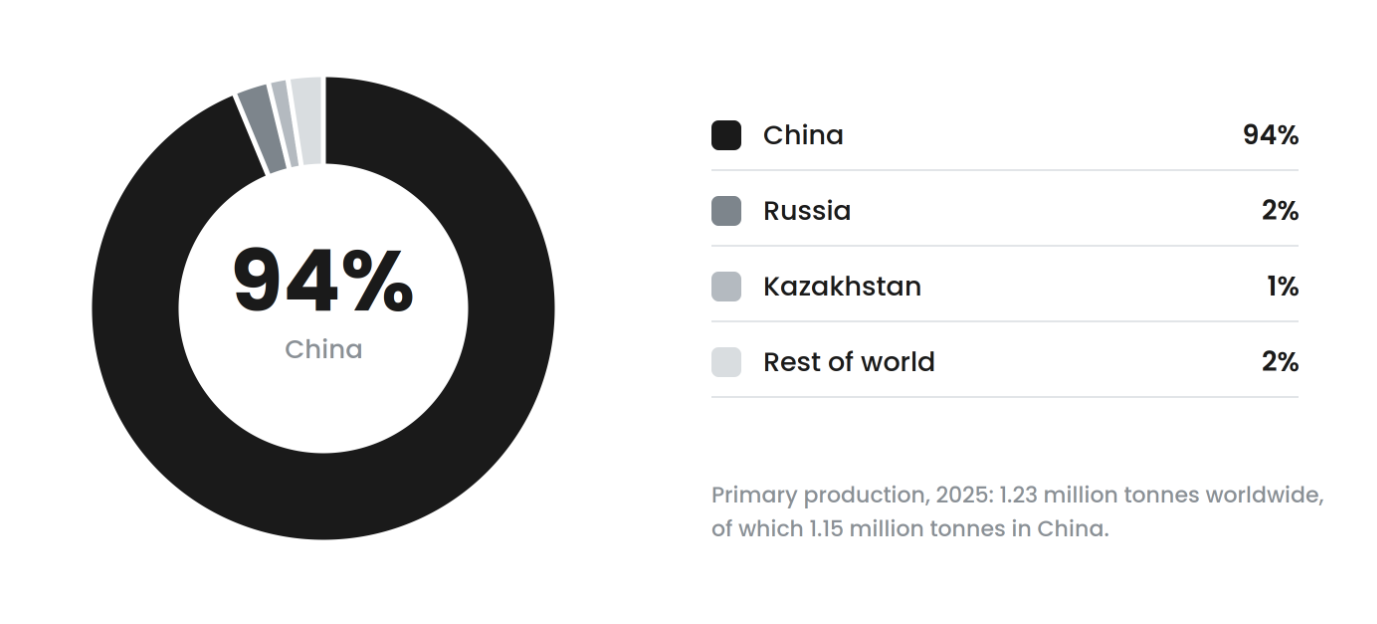
FIGURE 1 Primary magnesium production by country, 2025. Source: Project Blue, Magnesium Market Service.
In 2025 34.5 million vehicles were produced in China, and its industry roadmap targets 45kg of magnesium per car by 2030. If that target is met, Chinese cars alone would need about 1.55 million tonnes of magnesium a year – roughly 11 times what the whole world’s car industry uses today, and more than today’s entire global magnesium consumption of 1.37 million tonnes across all uses. Magnesium’s other uses, and growing demand in the rest of the world, come on top.
Carmakers Count in Grams for Efficiency Gains
Both for electric and combustion engine vehicles, every kilogram removed is range added, emissions cut and performance gained. Magnesium is the lightest structural metal in commercial use, 34% lighter than aluminium and 75% lighter than steel.
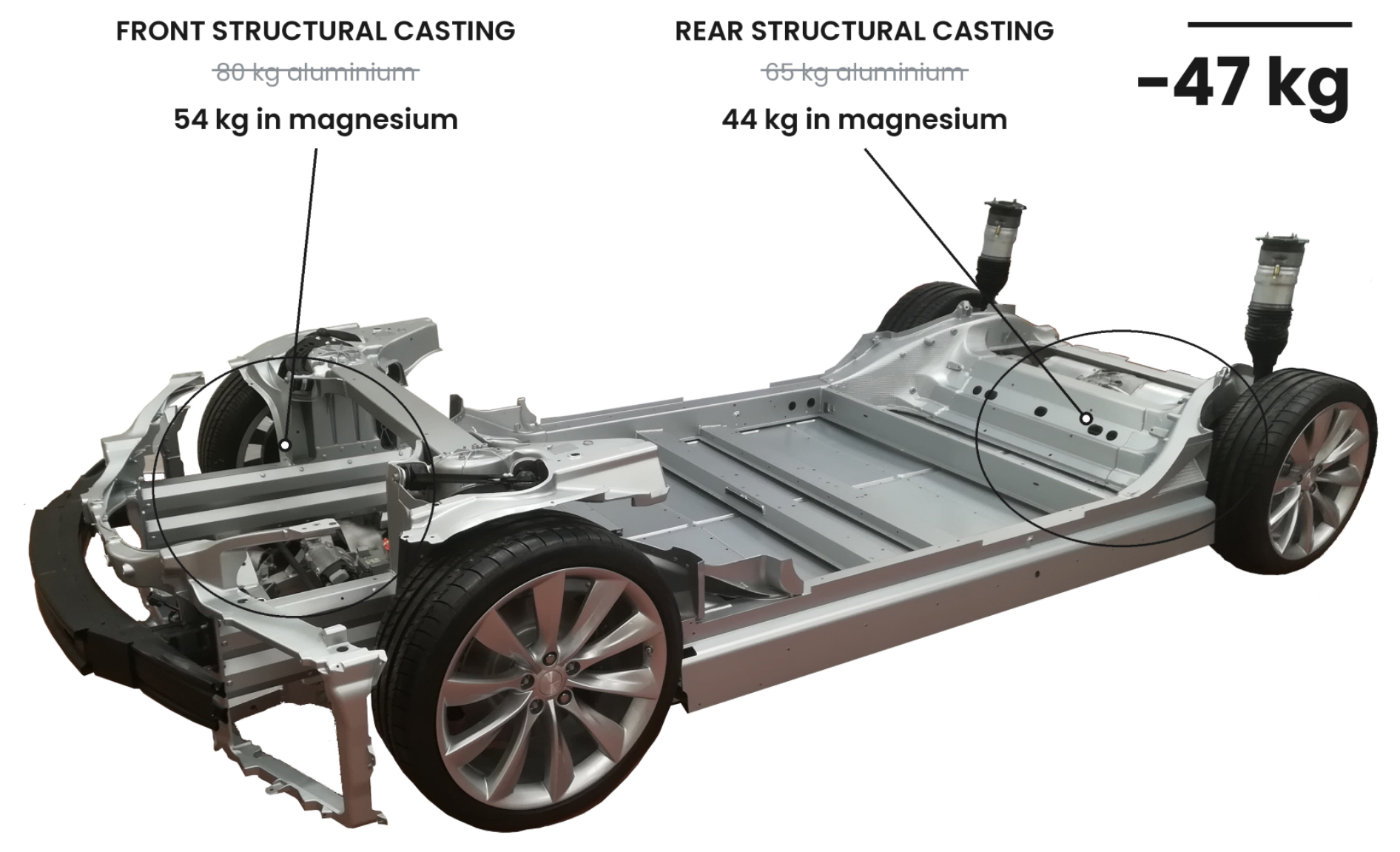
FIGURE 2 What magnesium does to a car’s structural castings. Illustrative front and rear casting weights, aluminium versus magnesium die casting (≈ one-third saving).
In practice, magnesium die castings can replace heavier metals in numerous car components; cross-car beams, wheels, seat frames, instrument-panel brackets, steering components and transmission cases. Each one saving several kilograms.
Magnesium also has a second, less visible role. It is an essential alloying element in the aluminium sheet used for car bodies. Around 670,000 tonnes, roughly half of all magnesium consumed in 2025, went into aluminium alloys. There is no substitute. As one Barclays analyst put it: if magnesium supply stops, “the entire car industry grinds to a halt”.
Magnesium Use In Cars Today
Industry analysis from September 2025 by Shanghai Metals Market puts average magnesium use in a fuel-powered car in China at about 1.5 kg. New energy vehicles carry more: an estimated 4.4 kg on average for models priced below US$28,000, and about 12.4 kg per vehicle above that price point. The highest fleet average achieved by any Chinese carmaker so far is roughly 19 kg, by Seres. The leading edge of use for the metal in the industry is at 19 kg, the current average car is in single digits, and China’s roadmap target is 45 kg. It is projected that around 30 in every 100 vehicles built in China today contain magnesium components, rising to 85 in every 100 by 2030.
Outside China, magnesium is already in production vehicles: Jeep uses a die-cast magnesium rear swing gate on the Wrangler, Ford Explorer and Land Rover Defender a magnesium cross-car dashboard beam.
What Happens if Current Supply is Disrupted
Most people outside the metals world aren’t aware, but the automotive industry has already had an episode of magnesium scarcity.
In 2021, authorities in China ordered magnesium production plants to cut output to meet power-consumption targets. As China supplies most of the world’s primary magnesium, the effect was immediate and global. Average Chinese ingot prices (Mg 99.9% min, EXW China) doubled from about US$1,950/t in 2020 to about US$3,945/t in 2021, European warehouse prices (Mg ingot 99.9%, in-warehouse Europe) peaked near US$7,900/t in early 2022, and spot quotes went far higher.
A cross-industry coalition including ACEA, the European carmakers’ association, publicly warned of “production shortages, business closures and job losses”, with European stocks expected to run out within weeks. Supply has recovered since 2021, but nothing structural has changed. The next disruption may just meet a market with substantially higher automotive demand.
The reliance on imported magnesium, and production concentration behind the 2021 episode has not changed since.
Magmec is closing that supply gap: producing low-carbon primary magnesium close to the industries that use it, from abundant, widely available feedstocks including dolomite and magnesium-rich brines. Our route to metal is a continuous DC-arc furnace process. The companies and investors who move on magnesium now will own a structural advantage for decades.
Follow Magmec for the next articles in this 3-part series, with aerospace and robotics coming.